


Description
These versatile and engaging task card sets cover a huge variety of Life science, Physical science, and Earth and Space science concepts. These task cards are great for sub plans, SCOOT activities, scavenger hunts, review, rotations, stations, partner work, or independent study. Each set also comes with a student response Google Form for distance learning. Task cards are so much more than a worksheet. Your students will absolutely love them! This bundle is priced to save 30% purchasing these sets individually.
————————————————————————————————-
Want digital task cards too? This task card bundle is also included in our Ultimate Task Card Bundle
————————————————————————————————-
All sets come with the following:
-Student recording sheets (PDF and editable version)
-Google form of student recording sheet
-Answer Key for teacher reference (PDF and editable version)
-Editable task card template to add your own questions
Adaptations and Natural Selection Task Cards (Set of 32)
-Charles Darwin and Natural Selection
-Instinct vs. Learned Behaviors
-Camouflage and Mimicry with examples
-Structural, Behavioral, and Physiological Adaptations
-Key Vocabulary (ex. hibernation, adaptation, migration, predator, prey, and more)
Atoms, Elements, and Molecules Task Cards (Set of 32)
-Counting atoms of a specific element
-Counting total atoms within a compound
-Counting the number of elements in a compound
-Determining the number of molecules of a specific compound
Body Systems Task Cards (Set of 32)
-10 Major Body Systems
-Functions of Body Systems
-Structures of Body Systems
-Body System Interactions
Cells Task Cards (Set of 36)
-Cell Theory
-Parts and Functions of a Cell
-Levels of Organization
-Prokaryotic and Eukaryotic
-Unicellular and Multicellular
-Plant and Animal
-Meiosis and Mitosis
-Osmosis, Diffusion, and Turgor Pressure
Chemical Equations and Formulas Task Cards (Set of 32)
-Law of Conservation of Mass
-Products and Reactants
-Balanced/Unbalanced Equations
-Counting atoms practice
Ecosystems and Energy Flow Task Cards (Set of 32)
-Producers, Consumers, Decomposers, and Scavengers
-Herbivores, Omnivores, and Carnivores
-Food Chains
-Food Webs
-Energy Pyramids
-Biotic and Abiotic Factors
-Primary and Secondary Succession
-Key Vocabulary terms (ex. ecosystem, habitat, community, etc.)
Energy Task Cards (Set of 32)
-Forms of Energy (7 cards)
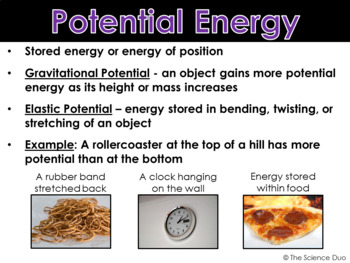
-Potential and Kinetic Energy (7 cards)
-Conduction, Convection, and Radiation (6 cards)
-Energy Transformations (10 cards)
-Energy/Energy Transformation and Law of Conservation of Energy Definitions (2 cards)
Force and Motion Task Cards (Set of 52)
-Balanced and Unbalanced Forces
-Net Force
-Force and Motion Vocabulary
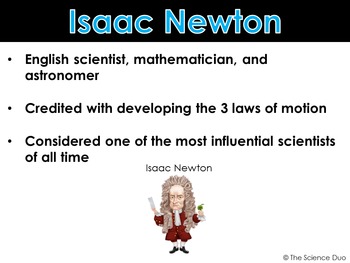
-Newton’s 3 Laws of Motion
-Speed, Velocity, and Acceleration
-Calculating Speed and Force
-Distance/Time Graphs
-Speed/Time Graphs
Genetics Task Cards (Set of 32)
-Gregor Mendel
-Punnett Square Practice
-Inherited vs. Acquired Traits
-Genotype vs. Phenotype
-Dominant vs. Recessive
-Homozygous vs. Heterozygous
-Hybrid vs. Purebred
-Key vocabulary
Periodic Table and Atoms Task Cards (Set of 40)
-Bohr Models
-Metals, Nonmetals, and Metalloids
-Protons, Electron, and Neutrons
-Atomic Mass and Atomic Number
-Valence Electrons
-Electron Dot Diagram
-Groups and Periods
-Similar Properties of Elements
Plate Tectonics Task Cards (Set of 32)
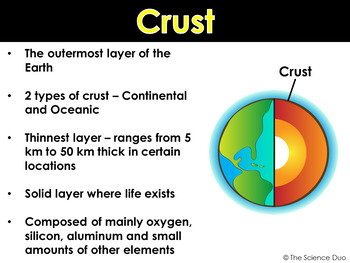
-Layers of the Earth
-Continental Drift Theory and Alfred Wegener
-Plate Boundaries (ex. Convergent, Divergent, and Transform)
-Sea Floor Spreading
-Diagrams and picture examples
Science Lab Safety Task Cards (Set of 24)
-Handling sharp objects
-The uses of goggles
-Fire Extinguisher
-Fire Blanket
-Eye Wash Station
-Safety Lab Shower
-Proper disposal of chemicals
-Wafting
Scientific Investigation Task Cards (Set of 48)
-Problem, Hypothesis, Investigation, Conclusion
-Observation vs. Inference
-Variables (Control, Dependent, and Independent)
-Length, Mass, Weight, Volume
-Identifying Science Equipment
-Reading a Triple Beam, Graduated Cylinder, Flask, and Beaker
-Water Displacement and LxWxH Volume Calculations
Space Task Cards (Set of 36)
-Types of Galaxies with examples and pictures (Spiral, Elliptical, and Irregular)
-Rotation vs. Revolution
-Inner vs. Outer Planets
-Astronomy Key Vocabulary (Telescope, light year, axis, solar system, universe, galaxy, star, etc.)
-Hertzsprung-Russell (HR) Diagram
-Stars
Earth Task Cards-Seasons, Tides, Moon Phases and Eclipses (Set of 40)
-Seasons in the Northern and Southern Hemispheres
-Identifying and Predicting Moon Phases
-Lunar Cycle Practice
-Identifying Tides
-Identifying Eclipses
-Rotation/Revolution of Earth
Weather Task Cards (Set of 40)
-Weather Instruments
-Key Vocabulary (Ex. Fronts, Convection, Wind, Air Pressure, El Nino, Global Warming, Greenhouse Effect, Hurricane, Tornado, Tsunami, Evaporation, Condensation, Precipitation, Transpiration, and more!)
Waves Task Cards (Set of 32)
-Waves vocabulary
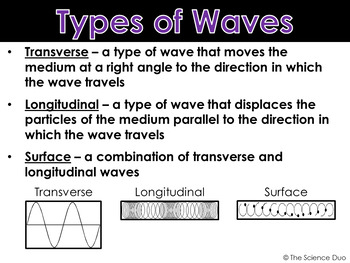
-Types of waves (transverse, longitudinal, and surface)
-Parts of waves (crest, trough, compression, rarefaction)
-Properties of waves (amplitude, wavelength, frequency, and speed)
-Interactions of waves (reflection, refraction, diffraction, and interference)
Weathering, Erosion, and Deposition Task Cards (Set of 32)
-Key vocabulary
-Types of weathering (Mechanical and Chemical)
-Types of erosion (Landslide, mudflow, slump, and creep)
-Landforms formed from deposition (Deltas and alluvial fans)
-Examples of weathering, erosion, and deposition
Simple Machines Task Cards (Set of 32)
-Key vocabulary
-Simple vs. compound machines
-Types of levers
-Types of pulleys
-Examples of all 6 simple machines
Energy Resources Task Cards (Set of 32)
-Key vocabulary
-Renewable and Nonrenewable examples (coal, oil, natural gas, nuclear, solar, wind, hydro, geothermal, biomass)
-Pros and Cons of energy resources
-Energy conservation
Classification Task Cards (Set of 32)
-Key vocabulary (classification, taxonomy, Carolus Linnaeus, dichotomous key, subspecies, sexual reproduction, asexual reproduction, and more)
-Identifying domains and kingdoms
-Identifying characteristics of organisms (unicellular, multicellular, autotroph, heterotroph, prokaryote, eukaryote)
Earthquakes and Volcanoes Task Cards (Set of 32)
-Key vocabulary (ex. earthquake, volcano, Richter scale, seismograph, seismologist, volcanologist, focus, epicenter, crater, caldera, vent, and more!)
-Types of faults (Normal, Reverse. and Strike-slip)
-Types of volcanoes (Shield, Composite, and Cinder cone)
-Components of a volcano (Vent, Magma chamber, Ash, Cinders, etc.)
Water Task Cards – Includes Water Cycle, Watersheds, and Water Conservation (Set of 32)
-Key vocabulary (ex. water cycle, condensation, evaporation, precipitation, transpiration, river, lake, pond, aquifer, watershed, and more!)
-Parts of the water cycle
-Watersheds
-Water conservation
Biomes Task Cards (Set of 32)
-Key vocabulary
-Identifying Earth’s major biomes (Tundra, Desert, Grassland, Rainforest, Deciduous (temperate) forest, Boreal forest (taiga), Marine water, and Fresh water)
-Identifying characteristics of Earth’s biomes
Electromagnetic Spectrum Task Cards (Set of 32)
-Key vocabulary
-Identifying parts of the spectrum (radio waves, microwaves, infrared rays, visible light, ultraviolet rays, x-rays, gamma rays)
-Identifying uses of electromagnetic waves
Thermal Energy Task Cards (Set of 32)
-Key vocabulary
-Identifying examples of conduction, convection, and radiation
-Solids, Liquids, and Gases
-Thermal Equilibrium and Specific Heat
-Conductors vs. Insulators
Planets Task Cards (Set of 32)
-Key vocabulary
-Identifying the inner and out planets
-Identifying characteristics of the inner and outer planets
-Basics of comets, asteroids, meteors, meteoroids, and meteorites
Light and Color Task Cards (Set of 32)
-Key vocabulary (ex. light, opaque, translucent, transparent, reflection, refraction, prism, mirage, concave, convex, and more)
-Identifying kinds of objects (opaque, translucent, or transparent)
-Mirrors (plane, concave, and convex)
-Lenses (concave and convex)
-Light and color (primary, secondary, etc.)
Rocks Task Cards (Set of 32)
-Key vocabulary
-Igneous, metamorphic, and sedimentry rock uses and characteristics
-Characteristics of rocks (ex. texture, color, mineral composition)
-Rock cycle basics
Properties of Matter Task Cards (Set of 32)
-Key vocabulary (ex. matter, weight, mass, conductivity, ductility, malleability, density, color, hardness, melting point, boiling point, viscosity, magnetism, luster, texture, solubility, and odor)
-Examples of matter
-Identifying chemical and physical properties
-States of matter
-Identifying properties of materials
External and Internal Stimuli Task Cards (Set of 36)
-Key vocabulary (ex. tropism, phototropism, geotropism, hydrotropism, thigmotropism, chemotropism, internal stimulus, external stimulus, homeostasis, and more)
-Identifying tropisms
-Examples of positive and negative tropism
-Stimulus vs. Response
Earth’s Tectonic Plates Task Cards (Set of 28)
-Identifying names of tectonic plates
-Identifying locations of tectonic plates
-Identifying types of boundaries at specific locations between tectonic plates
Topographic Maps Task Cards (Set of 32)
-Identifying key parts of topographic maps (i.e. contour lines, contour interval, hachure lines, gentle vs. steep slope, aerial view, profile view, etc.)
-Identifying contour intervals on various maps
-Comparing topographic maps to profile views
-Determining the direction of the flow of water
-Comparing different marked paths
Photosynthesis Task Cards (Set of 32)
-Key vocabulary (photosynthesis, cellular respiration, chloroplast, chlorophyll, stomata, producer, autotroph, heterotroph, and more)
-Identifying the chemical formulas for photosynthesis and cellular respiration
-Identifying the key processes of photosynthesis
-Functions of plant roots and stem
-Comparing autotrophs and heterotrophs
-Identifying reactants and products in chemical formulas
Geological Time Scale Task Cards (Set of 32)
-Key vocabulary (relative dating, radioactive decay, fossil, index fossil, eon, extinct species, paleontologist, and more)
-Identifying key characteristics of Earth’s eras (i.e. Cenozoic, Mesozoic, Paleozoic, and Precambrian)
-Identifying key characteristics of Earth’s periods (i.e. Quaternary, Tertiary, Jurassic, Triassic, and more)
-Classifying and comparing younger vs. older layers of rock
-Cambrian explosion
-Principles (i.e. Superposition, Cross-Cutting Relationships, Horizontality, Uniformitarianism)
Physical and Chemical Changes Task Cards (Set of 32)
-Key vocabulary
-Identifying characteristics of physical changes and chemical changes
-Physical vs. Chemical changes
-Differentiating between physical and chemical changes in digestion
-Classifying real world examples
Density Task Cards (Set of 32)
-Key vocabulary
-Identifying the formula for calculating density
-Manipulating the density formula to solve for mass or volume
-Identifying whether various substances will float or sink when placed in water
-Calculating density of regular and irregular-shaped objects
-Identifying substances based on their densities
Water Cycle Task Cards (Set of 28)
-Key vocabulary (water cycle, precipitation, evaporation, condensation, transpiration, runoff, percolation, groundwater, watershed, convection currents, and more)
-Identifying parts of the water cycle
-Identifying different forms of precipitation
-The importance of the Sun
-Cloud formation and the effect of wind
-The effects of the water cycle on landforms
Properties of Minerals (Set of 24)
-Key vocabulary (Mohs Scale of Hardness, mineral, luster, cleavage, color, streak, reactivity, magnetism, and more)
-Identifying hardness of minerals
-Basics of properties (i.e. luster, color, streak, cleavage, crystal structure, etc.)
-Identifying properties from given scenarios
Rock Cycle (Set of 28)
-Key vocabulary (rock cycle, sediments, igneous, metamorphic, sedimentary, compaction, magma, lava, convection currents, cementation, and more)
-Identifying the three main types of rocks
-Basics of the rock cycle
-Identifying weathering, erosion, and deposition
-Identifying the differences between mechanical and chemical weathering
-Characteristics of rocks
Electromagnetic Force (Set of 28)
-Key vocabulary
-Identifying basics of electromagnetic force
-Static vs. Current electricity
-Basics of magnets
-Basics of circuits
Atmosphere Task Cards (Set of 28)
-Key vocabulary (atmosphere, Greenhouse Effect, Coriolis Effect, convection currents, prevailing winds, jet stream, smog, fronts, weather, climate, and more)
-Identifying the five layers of the atmosphere
-Basics of each atmospheric layer
-Identifying gases in the atmosphere
-Human impact
-Weather vs. Climate
Endothermic and Exothermic Reactions (Set of 24)
-Key vocabulary
-Identifying basics of endothermic and exothermic reactions
-Endothermic vs. Exothermic Reactions
-Basics of chemical reactions
-Physical vs. Chemical Changes
Non-Contact Forces (Set of 28)
-Key vocabulary (force, non-contact force, force field, gravity, etc.)
-Identifying basics of non-contact forces
-Basics of gravitational, magnetic, and electrical force
-Centripetal vs. Centrifugal forces
Convection on Earth (Set of 28)
-Identifying the driving force for convection on Earth
-Warm vs. Cool air molecule diagrams
-Identifying the direction of movement of warm and cool ocean currents
-Land breeze vs. Sea breeze diagrams
-Basics of convection in Earth’s oceans and atmosphere
Elements that Comprise Earth (Set of 32)
-Identifying elements that comprise Earth’s crust, oceans, and atmosphere
-Analyzing circle graphs and bar graphs
-Determining abundance of elements that make up Earth
-Law of Conservation of Mass basics
Biotic and Abiotic Factors (Set of 32)
-Key vocabulary (biotic factor, abiotic factor, ecosystem, population, community, niche, competition, limiting factor, carrying capacity, and more)
-Identify biotic factors within ecosystems
-Identify abiotic factors within ecosystems
-Differentiate between niche and habitat
-Analyze various food webs and predict changes that will occur given specific scenarios
Cell Function (Set of 24)
-Key cell structures (i.e. cell wall, cell membrane, nucleus, mitochondria, endoplasmic reticulum, cytoplasm, etc.)
-Identify basic structures and functions of cells
-Compare and contrast cell structures to organism structures
-Compare and contrast cell functions to organism functions
Organic Compounds (Set of 32)
-Key vocabulary (i.e. organic compounds, inorganic compounds, element, compound, nucleic acids, carbohydrates, proteins, lipids, amino acids, and more)
-Identify basics of organic compounds
-Differentiate between organic and inorganic
-Analyze elements that make up organic compounds
Evidence of Chemical Reactions (Set of 32)
-Key vocabulary (i.e. chemical change, physical change, chemical reaction, reactants, products, chemical formula, chemical equation, element, compound, and more)
-Identify basics of chemical reactions including the 5 types of evidence
-Differentiate between physical and chemical changes
-Analyze several changes and determine the type of change and evidence
Space Exploration (Set of 32)
-Key vocabulary
-Basics of important missions
-Identify important tools for space exploration
-Identify key astronauts and their missions
-Analyze the history and future of space exploration – including the types of equipment and transportation needed for space travel
Environmental Changes (Set of 32)
-Key vocabulary (i.e. short-term changes, long-term changes, natural selection, migration, hibernation, camouflage, etc.)
-Differentiating between short and long-term changes
-Identifying causes of environmental changes
-Analyze human impact on the environment
Moon Phases (Set of 32)
-Key vocabulary (i.e. revolution, waxing, waning, crescent, gibbous, etc.)
-Identifying and predicting moon phases
-Lunar cycle practice
Symbiosis (Set of 32)
-Key vocabulary (symbiosis, mutualism, commensalism, parasitism, competition, parasite, host, predator, prey, etc.)
-Identify real-world examples of symbiotic relationships
-Differentiate between various examples of mutualism, commensalism, and parasitism
-Analyze parasite/host and predator/prey relationships
Microscopes (Set of 24)
-Key microscope vocabulary (i.e. eyepiece, stage, diaphragm, fine adjustment, coarse adjustment, arm, base, etc.)
-Identify parts of a microscope
-Identify functions of the parts of a microscope
-Analyze proper use, cleaning, and storage
Other products you may like:
Science Task Card Bundle – Includes Digital BOOM Cards™
Science Interactive Notebook Bundle
Science Warm-Up and Homework Bundle
Science Exit Ticket Bundle
Be sure to Follow Us by clicking the “Follow Me” button on our page to receive notification of new products. Thanks!
Terms of Use
© The Science Duo, LLC. All rights reserved.
License. Your purchase gives one teacher a license to use this resource with their own students. The license can’t be transferred. Each additional teacher, classroom, or school needs its own license. Please contact us about additional licenses.
Printing and copying. You may print and make copies for your own classroom instruction and for personal use.
Using it digitally with your students. You may share this resource digitally only in ways that limit access to your own students:
- through a learning management system that requires a student login (such as Google Classroom, Canvas, or Schoology)
- by email to your students or their parents/guardians
- through Google Drive or a similar service, shared with specific students only and never set to “anyone with the link”
- in recordings of your own teaching, shared privately with your students
Not permitted. You may not:
- post this resource on a public website, a shared or school-wide drive, or an open resource-sharing platform
- resell, redistribute, or claim the resource as your own
Clip art, fonts, and graphics belong to their creators and may not be extracted or reused outside this resource. Unauthorized sharing is copyright infringement under the Digital Millennium Copyright Act (DMCA).




Reviews
There are no reviews yet.